#29 The Summit of the Soul — Climbing Everest as a Journey to the Real
Podcast Summary:
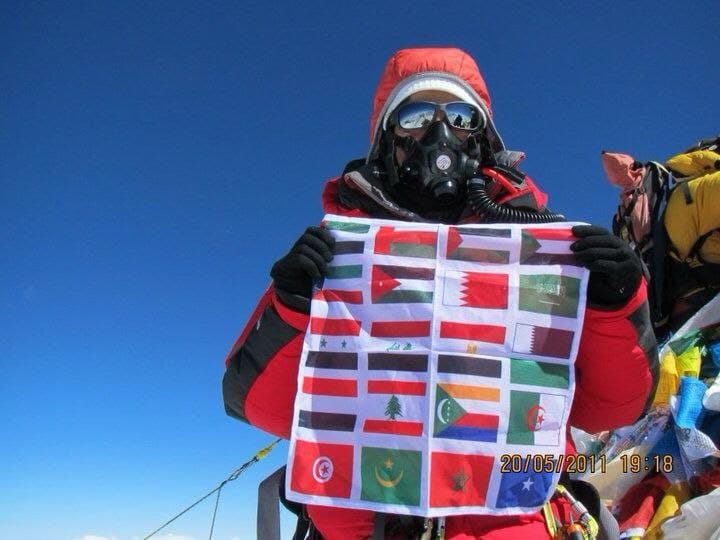
Suzanne Al Houby did not climb to conquer; she climbed to surrender. Starting her journey as a young mother and successful entrepreneur seeking a deeper purpose, she felt a profound disconnect between societal expectations and her inner calling. This led her to her first mountain, Kilimanjaro, and eventually to the highest point on Earth, Mount Everest (8,848 meters).
Throughout the podcast, Suzanne and Saqib explore the striking parallels between the grueling physical demands of high-altitude mountaineering and the spiritual path of Saluk. Instead of an ego-driven quest for a trophy, Suzanne’s ascent was an exercise in utter reliance on the Divine.
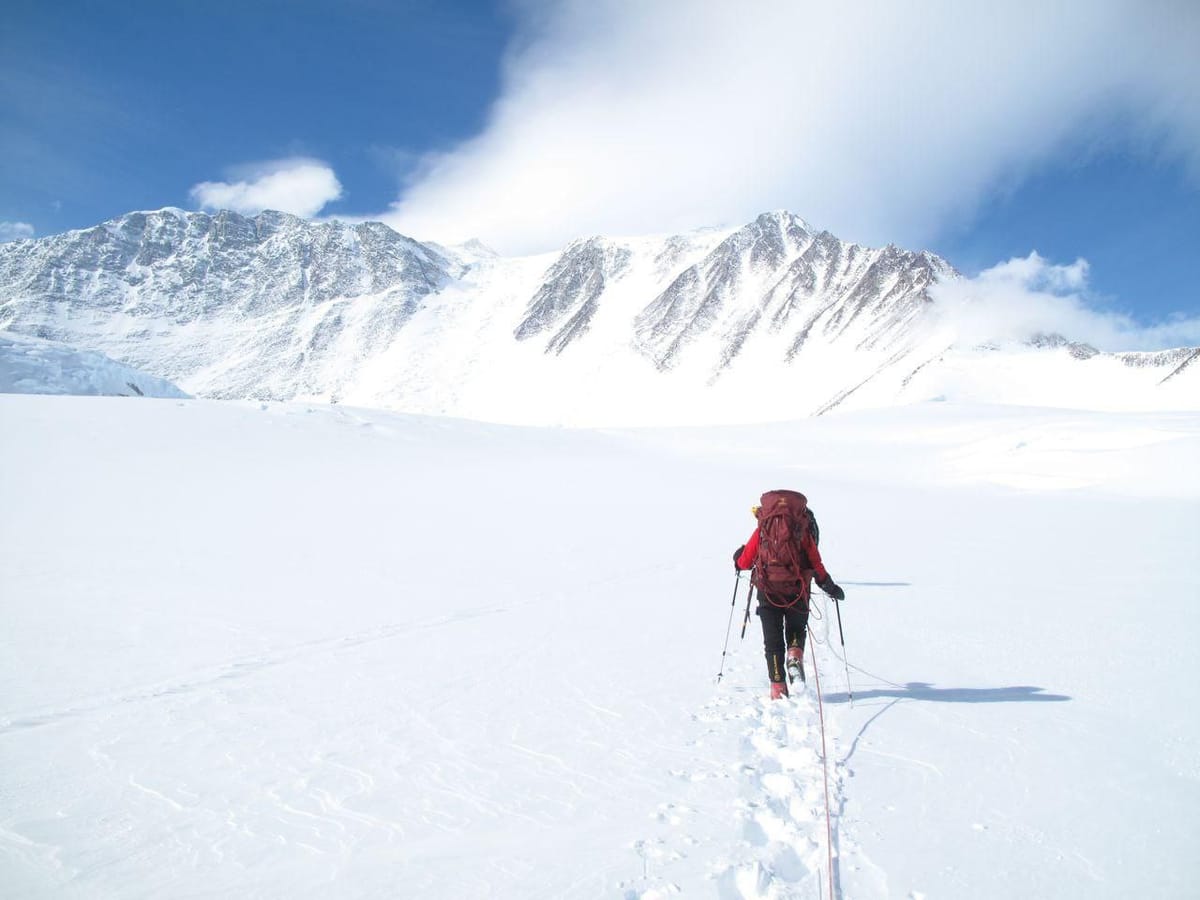
"Every rock, every star, every breeze of air, every sunrise, every sunset, every melting snow, every avalanche, was a message or a manifestation from God to me... I was able to see or to feel or to listen to the message in everything of God's creation."
Sufi Metaphysics on the Mountain
The conversation beautifully weaves traditional Islamic mysticism with the stark realities of surviving the Himalayas. Here are the core Sufi concepts discussed in this episode:
1. Spiritual Poverty (Faqr) and the Sacred Void
Before Suzanne ever set foot on a mountain, she felt an inner void. In the Sufi tradition, the human soul is essentially a vessel waiting to be filled. In Akbarian metaphysics, the human soul is viewed as a "possible thing" that possesses no inherent reality on its own; it is pure receptivity. This emptiness is not a lack, but a sacred gift—Faqr (spiritual poverty). It is the necessary space God creates within us to receive the Divine. Rumi often echoes this by urging the seeker to "sell your cleverness and buy bewilderment." Suzanne’s urge to climb was an answer to this summons, an embrace of the void waiting to be filled by the Real.
2. Contraction and Expansion (Qabd and Bast)
Climbing Everest is not a linear ascent. Climbers must undergo "rotations"—climbing to a high altitude to acclimate, and then retreating back down to Base Camp to recover.
This physical shattering and rebuilding perfectly mirrors the spiritual states of Qabd (contraction) and Bast (expansion). If we were to stay in a constant state of spiritual expansion, the sheer intensity of the divine light would destroy us. Rumi frequently points to the necessity of winter's harsh, barren retreat to build the capacity for spring's blossoming. The forced physical retreat down to the mud of Base Camp is what builds the spiritual and physical capacity necessary to withstand the summit.
3. Spiritual Pegs (Awtad) and Inner Depth
The Quran refers to mountains as pegs (Awtad). In Ibn Arabi’s cosmology, the Awtad are not just physical mountains, but also the four central spiritual poles or saints who anchor and stabilize the universe. Suzanne reflects on how the visible majesty of a mountain is only a fraction of its true reality:
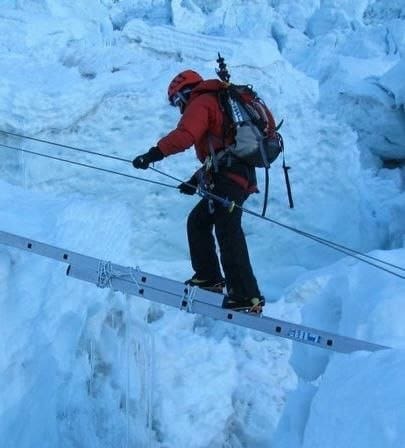
"Scientifically, I learned that, yes, nine kilometers of Everest is above the surface, but it's more than 100 kilometers deep. And if this taught me anything, it taught me that, yes, there is the external climbing, but the journey of internal climbing is far deeper."
4. The Breath of the Merciful (Nafas al-Rahman) in the Death Zone
Above 8,000 meters lies the "Death Zone," where oxygen is so scarce that the human body slowly begins to die. Here, the illusion of human autonomy is entirely stripped away, revealing a core Akbarian reality: the entire cosmos is continually manifested and kept alive by the Nafas al-Rahman (the Breath of the Merciful). Just as words are carried on our breath, every atom is a spoken word of the Divine exhale.
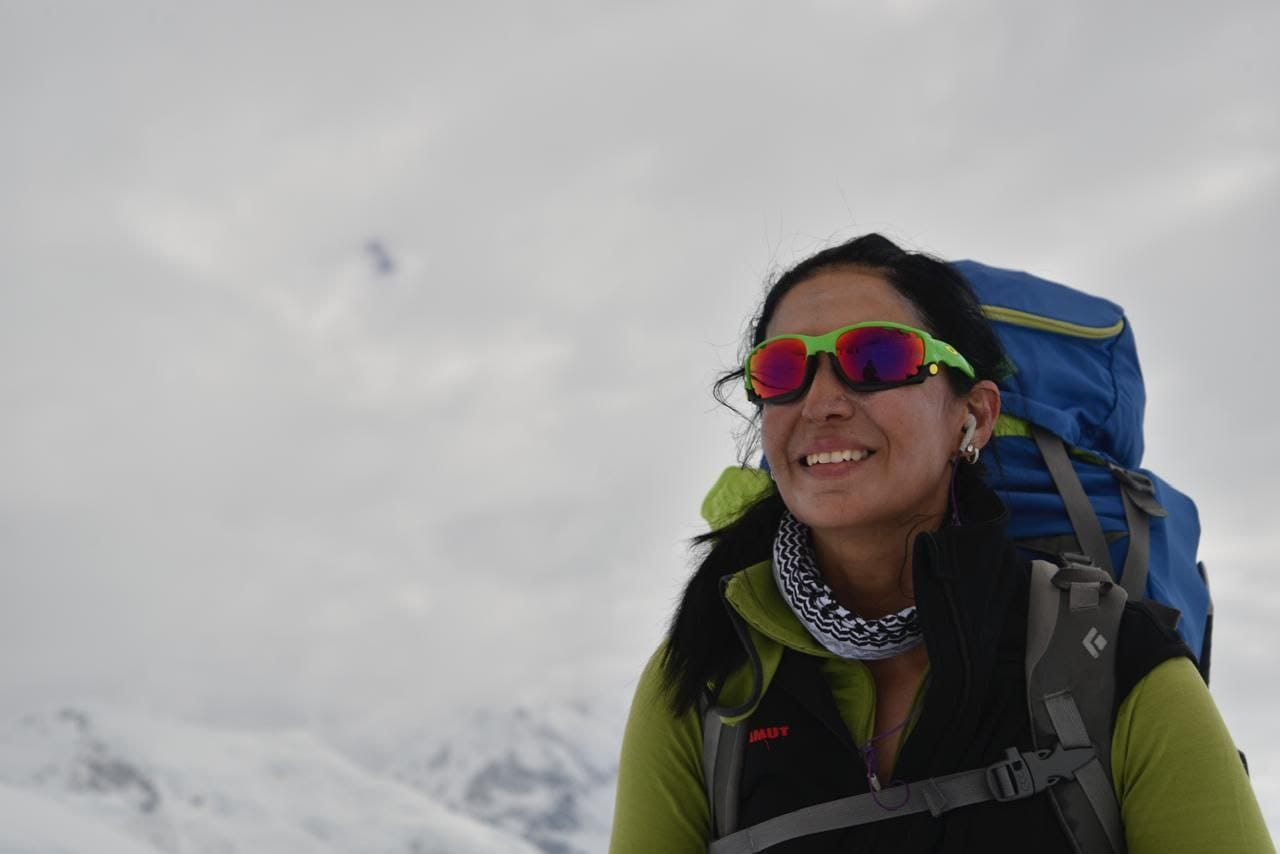
"One second, I am nothing. The next second, when I feel the Nafas al-Rahman, I almost feel like I'm everything. But still in the memory, I am nothing because I'm not controlling that breath... It comes from the source. It comes from Allah."
5. Invoking Divine Assistance (Madad) and Surrender
When physical endurance completely evaporated after 42 hours of climbing, Suzanne relied on Madad—spiritual support. In this state, the ego (nafs) is crushed, and a higher intelligence takes over. Rumi reminds us that the solitary journey of a thousand years can be traversed in a moment when we surrender our ego and lean on the guidance of masters (much like the unsung Sherpas of the mountain). Reaching the peak wasn't about imposing her will, but relinquishing it entirely:
"You can be as arrogant and think you're going to conquer it... but it's really not your call. It's not your decision. You're not going to guarantee what's going to happen next. And what does this mean? It means total faith and surrender."
6. Redefining the Summit (Fana and Baqa)
Reaching the top represents Fana (annihilation of the ego), but the descent represents Baqa (subsistence)—returning to the relative world transformed. In Ibn Arabi's terms, this mirrors the journey of the Perfect Human (al-Insan al-Kamil), who experiences transcendent unity at the peak but must return to the immanent, everyday world to serve creation. As Rumi writes, "The book of the Sufi is not of ink and letters; it is nothing but a heart white as snow." Suzanne learned that the destination is an illusion without the pristine presence found in the ascent:
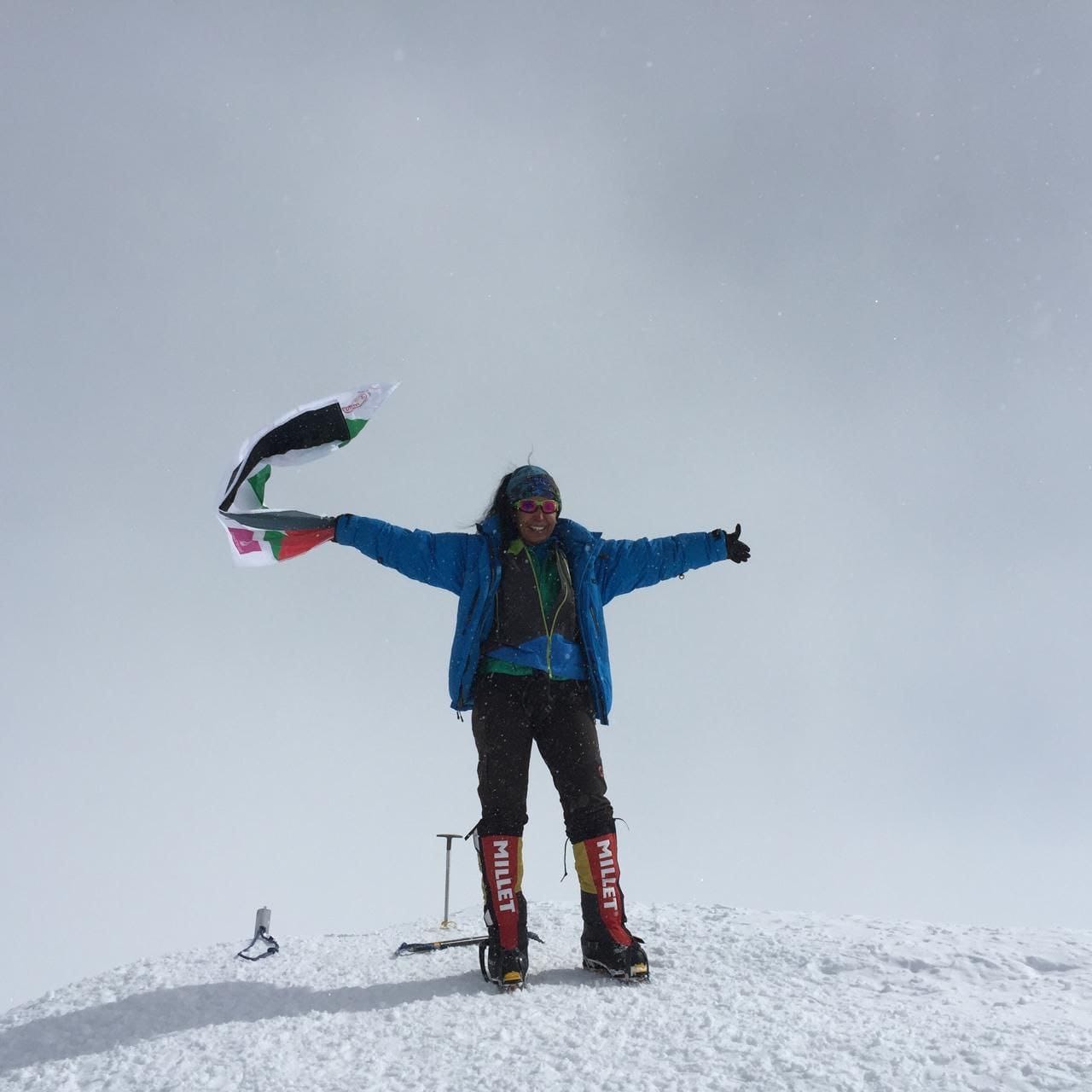
"I'm a believer that every new step you take is actually a new summit... The summit really doesn't mean anything if you exclude it from the journey."
Navigating Everyday Mountains: Suzanne’s Advice on Resilience and Burnout
In the latter half of the episode, Saqib opens up about his own struggles with workplace burnout, toxic environments, and the heavy burdens we carry in daily life. Suzanne offers profound, practical wisdom for anyone feeling stuck on their own difficult ascent, reshaping how we view endurance and self-preservation.
Shattering Self-Imposed Limits
Suzanne addresses the common human tendency to underestimate our own capabilities, noting that society often conditions us to doubt how far we can truly go. She emphasises that reaching our true potential requires pushing through discomfort. By breaking past what we mistakenly believe to be our absolute limit, we undergo a transformation where our previous maximum effort barely even registers as our new minimum baseline.
Prioritising Peace in Toxic Environments
When navigating rigid or unhealthy environments that trigger constant frustration and burnout, Suzanne suggests that walking away is often the healthiest choice. She places the highest value on internal peace of mind rather than forcing oneself to fit into a restrictive box. Furthermore, she gently corrects the notion that we must always seek closure or demand explanations from those who have wronged us, explaining that a peaceful life is much easier to attain when we let go of the need to have the final say.
Redefining True Resilience
A major misconception Suzanne challenges is the idea that stepping away equates to giving up. She explains that true resilience does not mean enduring continuous mistreatment or hardship merely to prove your strength or avoid feeling defeated. Recognising when enough is enough and knowing exactly when to cut ties is a profound demonstration of inner strength, not a failure.
Flowing Around Obstacles
Drawing inspiration from nature, she advises adopting the qualities of water when faced with life's barriers. Whether a problem is sharp and dangerous or simply large and stubborn, the most graceful and effective approach is to maintain a steady, gentle flow around the obstacle, rather than forcefully crashing against it.
Choosing Battles Strategically
Finally, Suzanne reminds us that it is impossible to tackle every challenge simultaneously. She advocates for a deliberate selection of which battles to engage in. Encountering a setback or choosing to step down from a specific conflict does not mean the overarching journey is lost; rather, it provides the strategic insight and preparation needed for whatever comes next.